ULA Vulcan Launch Failure: 40 Amazon Leo Satellites Lost
ULA's Vulcan rocket failed about 10 minutes after launch on 15 November, losing 40 Amazon Leo satellites. Here is what happened and what comes next.
Key points
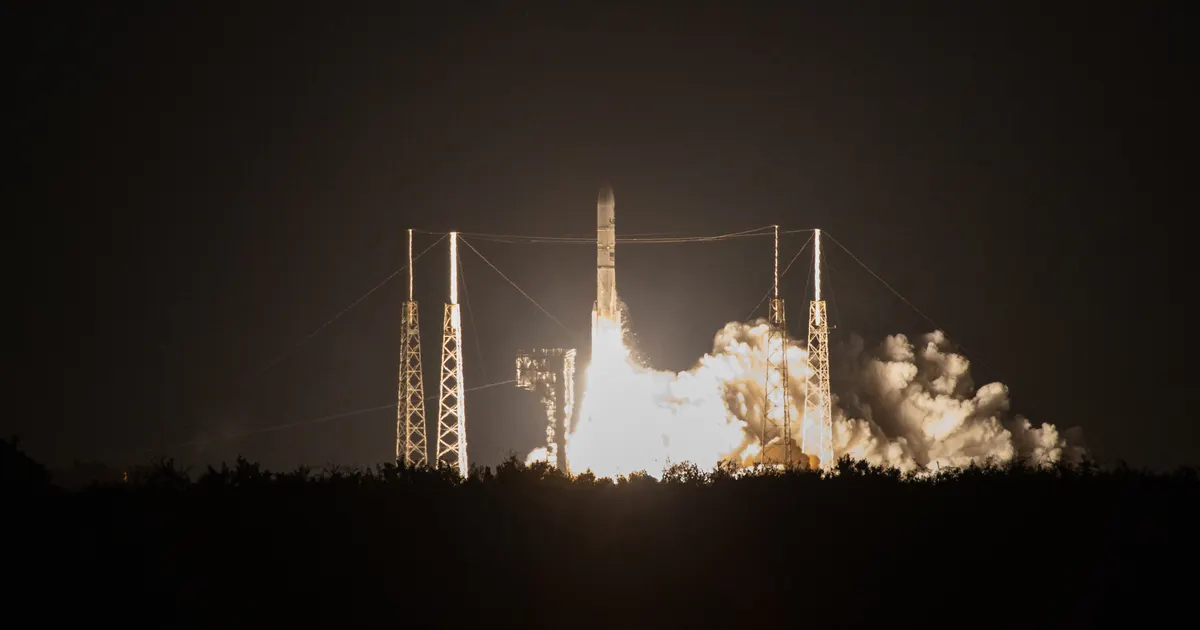
- United Launch Alliance's Vulcan rocket lifted off from Cape Canaveral at 12:40 p.m. ET (17:40 UTC) on Sunday, 15 November 2026, carrying 40 Amazon Leo satellites.
- ULA said the rocket suffered an anomaly about 10 minutes into the flight and did not deliver the satellites to orbit.
- It is the first outright launch failure for ULA since the Boeing and Lockheed Martin joint venture was formed in 2006.
- The mission, Vulcan Leo 1, was the first of 38 Vulcan launches Amazon has bought for its Leo broadband constellation and Vulcan's first flight in nine months.
- ULA says it will investigate with Amazon and other organisations before Vulcan returns to flight.
United Launch Alliance (ULA) lost its Vulcan rocket and all 40 Amazon Leo internet satellites on board on Sunday, 15 November 2026, after an anomaly about 10 minutes into the flight from Cape Canaveral, Florida. It is the first outright launch failure in ULA’s 20-year history and a setback for Amazon, which had booked Vulcan to carry a large share of its planned Starlink rival into orbit.
What happened on the Vulcan Leo 1 launch?
The mission, which ULA called Vulcan Leo 1, lifted off from Space Launch Complex 41 at Cape Canaveral Space Force Station at 12:40 p.m. ET (17:40 UTC), according to Space.com. That was the very end of a 29-minute window. Spaceflight Now reports that controllers had called a hold at T-20 seconds for a technical issue before re-targeting; it is not yet known whether that hold had anything to do with what followed.
ULA flew Vulcan in its most powerful VC6L configuration, with six Northrop Grumman GEM 63XL solid rocket boosters, two Blue Origin BE-4 engines on the first stage, and a version of the Centaur V upper stage tuned for low Earth orbit, according to ULA’s mission page.
The early part of the flight looked normal. Via Satellite reports that the boosters separated about a minute and a half after liftoff, the upper stage ignited about five minutes in and the payload fairing came away as planned. Spaceflight Now, however, says the first stage appeared to burn longer than the published timeline, separated later than expected, and that telemetry showed the Centaur making unusual orientation changes early in its burn.
The webcast ended before any problem was announced. About 50 minutes after liftoff, ULA said on X that the vehicle “suffered an anomaly 10 minutes into the flight” and did not deliver the Amazon mission to orbit, as quoted by Space.com. The company added that it did not yet have specific data on what went wrong.
Why it matters
This was a return-to-flight mission. Vulcan had not flown since February 2026, when a solid booster nozzle burned through and broke away shortly after liftoff, the second time that had happened after a similar problem in October 2024. Both of those missions still reached orbit, but the U.S. Space Force paused national security launches on Vulcan while ULA and Northrop Grumman investigated. ULA said it had made design and process changes to the nozzles before Sunday’s flight.
Northrop Grumman said preliminary data shows its boosters performed as expected and separated before the anomaly, according to Via Satellite. That points to a different, and more serious, problem than the nozzle issue.
For ULA, a joint venture of Boeing and Lockheed Martin, the loss ends a record with no outright mission failures since 2006, Spaceflight Now notes. NASA Administrator Jared Isaacman offered support, saying “Artemis, Moon Base, and the nation need ULA.”
For Amazon, the timing is difficult. Amazon Leo, formerly Project Kuiper, needs more than 3,000 satellites to complete its constellation, and Vulcan Leo 1 was the first of 38 Vulcan launches Amazon has bought. Amazon Leo launch systems director Melissa Wuerl said during the broadcast that Vulcan was expected to launch close to 1,500 satellites, almost half the network, Via Satellite reports.
Key details
- Payload: 40 Amazon Leo satellites, the most Amazon had put on a single launch.
- Flight: Vulcan’s fifth launch overall and its first since February 2026.
- Constellation so far: Amazon had launched nearly 400 Leo satellites on 14 missions as of its October update, using Atlas V, Falcon 9 and Ariane 6 rockets.
- Amazon’s response: Amazon called ULA a “trusted partner,” said all launches carry risk and that it expects ULA to learn from the mission, according to Via Satellite.
- Delays before launch: A Friday attempt was scrubbed by a power problem at a nitrogen plant serving the Cape, and a Saturday attempt by a network fault between the rocket and ground systems.
What happens next?
ULA said it will work with Amazon and other appropriate organisations to find the cause, take corrective action and return Vulcan to flight as quickly as possible. Spaceflight Now says the rocket now faces a potentially long grounding while engineers study the telemetry, and Amazon will have to wait for that investigation before flying on Vulcan again.
Amazon’s other big launch option is also on hold: Blue Origin’s New Glenn has not flown since an explosion on the pad in May, which was traced to a BE-4 engine valve. Blue Origin is also developing new hardware for the rocket, as we covered in our story on the Glenn Stage 3 and Northstar engine. Meanwhile, rival SpaceX is pushing ahead with reusable Starship, which reached orbit again on Flight 15.
Amazon’s next Leo mission listed on its updates page is LE-04, an Ariane 64 launch of 36 satellites from French Guiana targeted for no earlier than 23 November 2026. Whether that date holds, and how long Vulcan stays grounded, will shape how quickly Amazon can keep building its network.
Frequently asked questions
What happened to the Vulcan rocket on 15 November 2026?+
ULA's Vulcan Centaur launched from Cape Canaveral with 40 Amazon Leo satellites, but suffered an anomaly about 10 minutes after liftoff, during the Centaur upper stage's burn. The satellites did not reach orbit, and ULA has not yet named a cause.
How many Amazon Leo satellites were lost?+
All 40 satellites on board were lost. It was the largest batch Amazon had put on a single rocket so far. Before this launch, Amazon had placed nearly 400 Leo satellites in orbit on Atlas V, Falcon 9 and Ariane 6 rockets.
Is this ULA's first launch failure?+
Yes. According to Spaceflight Now, it is the first outright mission failure for ULA since the company was founded in 2006. Two earlier Vulcan flights had problems with solid rocket booster nozzles, but both still delivered their payloads.
Sources
- United Launch Alliance – Vulcan Leo 1 mission page
- Amazon – Amazon Leo mission updates
- Spaceflight Now – ULA suffers first outright failure with loss of Vulcan rocket carrying 40 Amazon Leo satellites
- Space.com – Vulcan Centaur rocket fails during return-to-flight launch, 40 Amazon satellites lost
- Via Satellite – ULA Vulcan rocket suffers anomaly during first Amazon Leo launch
- United Launch Alliance
- Vulcan Centaur
- Amazon Leo
- Satellite internet
- Cape Canaveral

PFM Today Newsroom · News Desk
The PFM Today Newsroom tracks developments across startups, AI, design, business and more. Stories are researched from primary sources and reputable outlets, written with AI assistance, and reviewed against our editorial policy before publishing. Read our editorial policy.