Blue Origin Unveils Glenn Stage 3 and Northstar Engine for New Glenn
Blue Origin has revealed a new third stage, GS3, and a more powerful Northstar first-stage engine for New Glenn. Here are the specs and what they mean.
Key points
- Blue Origin announced a new upper stage, Glenn Stage 3 (GS3), and a new first-stage engine, Northstar, at its Up.Summit event at Kennedy Space Center.
- GS3 can carry up to 14 metric tons to geostationary orbit and 20 metric tons to trans-lunar injection on the larger 9x4 New Glenn.
- Northstar burns liquefied natural gas and liquid oxygen and produces about 715,000 pounds of thrust, versus 640,000 for the BE-4.
- New Glenn has not flown since a pad explosion in late May 2026.
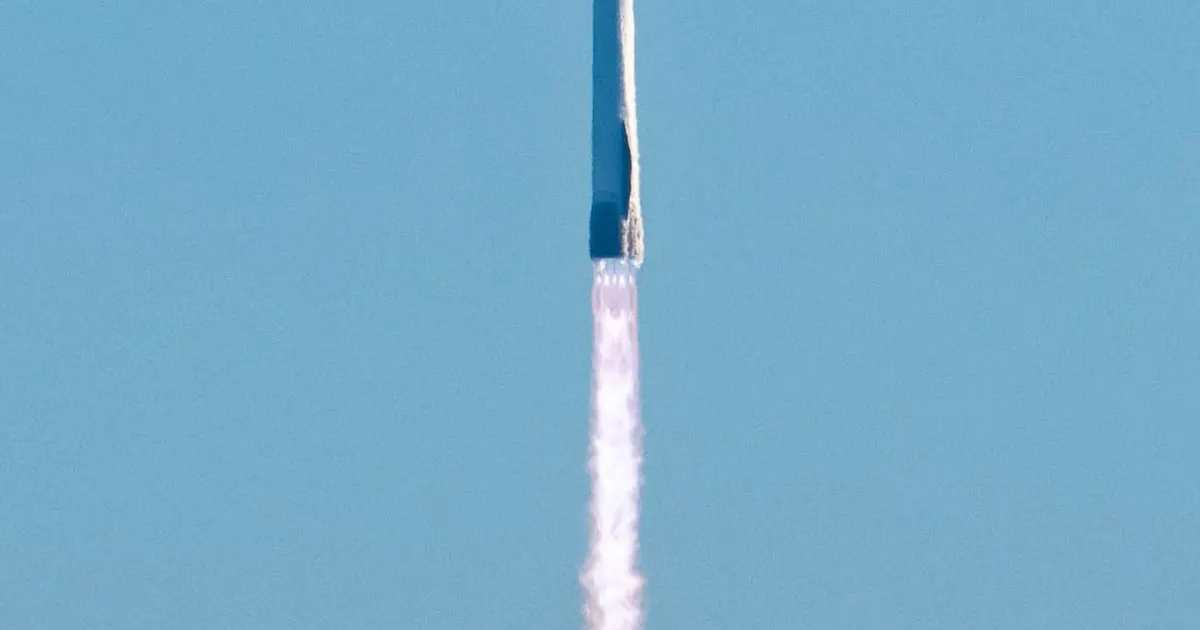
Blue Origin has revealed two major additions to its New Glenn rocket: a new third stage called Glenn Stage 3 (GS3) and a new, more powerful first-stage engine called Northstar. Chief executive Dave Limp announced both at Up.Summit, an invite-only event at NASA’s Kennedy Space Center in Florida, Spaceflight Now reported on November 5, 2026.
What Blue Origin announced
GS3 is an optional upper stage for missions that need extra energy, such as delivering satellites directly into geostationary orbit or sending spacecraft out of Earth orbit toward the Moon and beyond. Blue Origin says it is built on existing New Glenn hardware and does not change how customers integrate their payloads.
Blue Origin gave these performance figures for GS3:
- New Glenn 9x4: up to 14 metric tons to geostationary orbit and 20 metric tons to trans-lunar injection
- New Glenn 7x2: up to 8 metric tons to geostationary orbit and 10 metric tons to trans-lunar injection
GS3 is powered by the BE-7 engine, the same engine used on Blue Origin’s Blue Moon Mark 1 and Mark 2 lunar landers. It uses the same payload adapters and fairing as the two-stage rocket and sits inside an interstage, so the full fairing volume is kept.
Testing is already under way
Blue Origin said testing of GS3 has started at its Launch Site One in Texas. A liquid hydrogen tank for the stage held its maximum expected operating pressure for two and a half hours, and 150% of that pressure for 10 minutes. The company expects it to be the first composite liquid hydrogen tank to fly in space.
The Northstar engine
Northstar is a new engine for New Glenn’s first stage. Like the current BE-4, it burns liquefied natural gas and liquid oxygen, but it produces about 715,000 pounds of thrust, compared with about 640,000 for BE-4.
The engine uses a staged combustion cycle with a single-shaft turbopump, technology Blue Origin carried over from its earlier engine work. The company said Northstar went from programme approval to development testing in 11 months, and that the engines can be assembled in less than a day.
Blue Origin said Northstar will join the BE-4 rather than replace it immediately, and gave no timeline. According to Spaceflight Now, the BE-4 will still play an important role, including in New Glenn’s return to flight.
Why it matters
GS3 is aimed at the most demanding and valuable launch missions. Sending heavy payloads directly to lunar transfer orbit shortens travel time and leaves more fuel on the spacecraft for operations once it arrives. Blue Origin said GS3 is not required for its current plans to land astronauts on the Moon, but could support sustained operations around the Moon. The company also has a government mission planned for 2028 that will send a payload to cislunar space.
A more powerful and faster-to-build first-stage engine could help Blue Origin increase its launch rate, a key goal as it competes with SpaceX.
Context: New Glenn’s rocky 2026
The announcements come during a difficult year for the rocket. New Glenn’s third flight in April 2026 ended with an upper-stage problem that left a commercial satellite in the wrong orbit, and the FAA grounded the rocket while the failure was investigated. Then, in late May, a New Glenn exploded on the pad, an incident the company later linked to an engine issue. The rocket has not flown since.
What happens next
Blue Origin has not announced a return-to-flight date. In October, the company said it plans to add new launch pads in Florida and is seeking a much higher New Glenn flight rate. GS3 and Northstar will need to complete development and testing before they fly.
Frequently asked questions
What is Blue Origin's Glenn Stage 3?+
GS3 is an optional third stage for the New Glenn rocket, designed for missions that need to go directly to geostationary orbit or leave Earth orbit entirely, such as trips to the Moon. It is powered by Blue Origin's BE-7 engine.
What is the Northstar engine?+
Northstar is a new first-stage rocket engine from Blue Origin that burns liquefied natural gas and liquid oxygen, like the BE-4, but with more thrust: about 715,000 pounds-force compared with 640,000 for the BE-4.
When will New Glenn fly again?+
Blue Origin has not given a return-to-flight date. New Glenn has been grounded since a pad explosion in late May 2026, which the company later linked to an engine issue.
Sources
- Blue Origin
- New Glenn
- Rocket engines
- Launch vehicles
- Moon

PFM Today Newsroom · News Desk
The PFM Today Newsroom tracks developments across startups, AI, design, business and more. Stories are researched from primary sources and reputable outlets, written with AI assistance, and reviewed against our editorial policy before publishing. Read our editorial policy.