Starship Flight 15: Booster Catch Aborted, Ship 42 Reaches Orbit
SpaceX launched Starship Flight 15 on 13 November. The booster catch was called off, but Ship 42 reached orbit, deployed 26 Starlinks and sets up a ship catch.

Key points
- SpaceX launched Starship Flight 15 from Starbase, Texas, at 5:47 p.m. ET (22:47 UTC) on Friday, 13 November 2026.
- The planned tower catch of the Super Heavy booster was called off, and Booster 22 made a controlled splashdown in the Gulf of Mexico about six and a half minutes after liftoff.
- Ship 42 reached a low Earth orbit of about 275 km, making Flight 15 only the second Starship to reach orbit.
- All 26 Starlink V3 satellites were deployed, including three that carry cameras to photograph the ship's heatshield.
- Ship 42 is set to attempt the first-ever catch of a Starship upper stage at Starbase at around 21:17 to 21:20 UTC on Saturday, 14 November, if its systems are judged healthy.
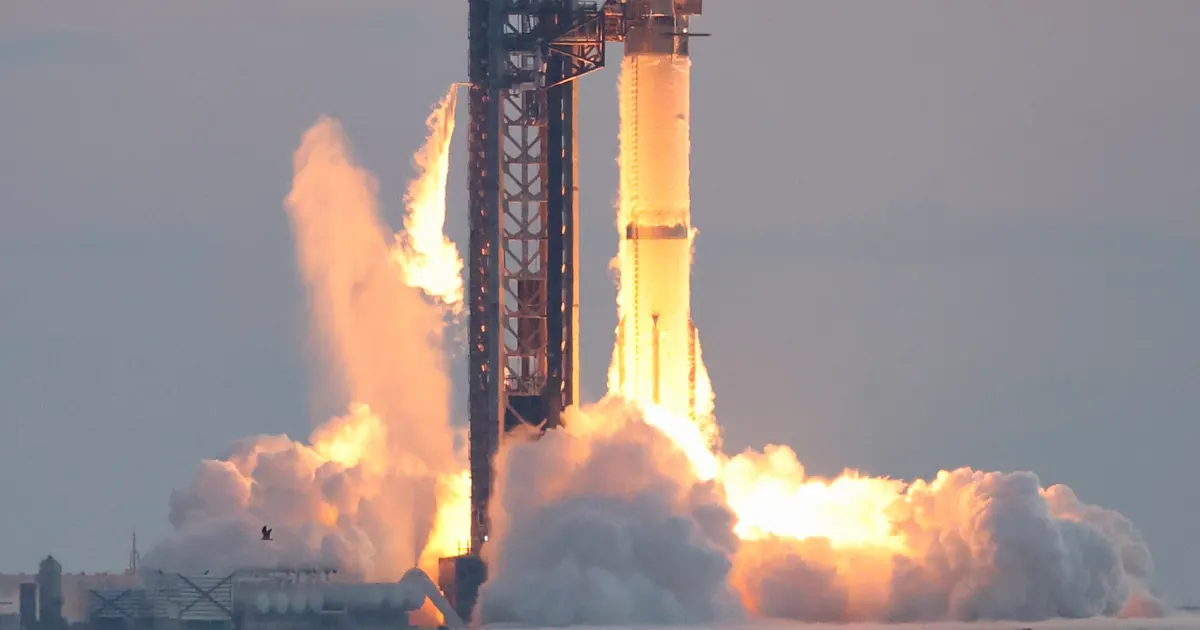
SpaceX launched Starship Flight 15 from Starbase, Texas, on Friday, 13 November 2026, but called off the planned tower catch of its Super Heavy booster, which splashed down in the Gulf of Mexico instead. The Starship upper stage, Ship 42, did reach orbit and deploy all 26 of its Starlink satellites, and it is set to attempt the first-ever catch of a Starship upper stage at the launch tower on Saturday afternoon. That catch is the result SpaceX most wants from this flight, because full reuse of both stages is central to its plans for Starlink and NASA’s Moon missions.
What happened at launch?
According to Space.com, the rocket lifted off at 5:47 p.m. ET (22:47 UTC), two minutes into its launch window. Hot staging, where the ship lights its engines before the booster falls away, came about two and a half minutes after liftoff, and Starlust reports that all six of Ship 42’s Raptor engines ignited.
The flight used Booster 22 and Ship 42, both from SpaceX’s larger Block 3 hardware. Our Flight 15 preview set out the full plan: catch the booster minutes after launch, then catch the ship after about 22 hours and 14 orbits.
Why was the booster catch called off?
SpaceX has not yet said. Drohnen.de, which tracked the flight live, reports that the catch was waved off at around 22:54 UTC, and a minute later SpaceX posted that Super Heavy had diverted to an offshore splashdown in the Gulf. Space.com says the booster made a controlled splashdown about six and a half minutes after launch and that the reasons were not immediately clear. Gizmodo also reported that SpaceX did not yet know the cause, and SpaceX spokesperson Dan Huot said the team would investigate.
CBS News noted the booster did not make the landing at the tower. Had it worked, it would have been the first catch of a Block 3 (V3) booster. SpaceX has caught earlier-generation boosters with the tower’s “chopstick” arms before, so the abort does not undo that track record, but it does mean the double catch is no longer possible on this flight.
How did Ship 42 do in orbit?
The upper stage had a much better night. Space.com reports that a roughly 20-second engine burn about 26 minutes after liftoff placed Ship 42 into a low Earth orbit of about 275 km (170 miles). On the SpaceX webcast, Huot described the ship as “now in orbit around Earth for the second time ever.” Flight 14, which launched on 28 September 2026, was the first Starship to reach orbit.
Key details from the first hours of the flight:
- Starlink deployment: All 26 Starlink V3 satellites were released over about 42 minutes, starting around 35 minutes after launch, according to Space.com. SpaceX later confirmed the deployment was complete.
- Heatshield cameras: Three of the satellites carry cameras that photograph the ship’s heatshield as it slowly rotates during deployment. SpaceX says these images are one of the inputs for deciding whether the ship can return to Starbase.
- Health checks: Starlust reports that SpaceX said “all systems are looking good” as the ship began a long coast, and that it passed its first return checkpoint near Hawaii. SpaceX also said early deorbit options remained available if needed.
When is the Starship ship catch?
The catch attempt is planned for Saturday, 14 November 2026, roughly 22.5 hours after launch. Space.com puts the return at about 4:17 p.m. ET (21:17 UTC), while Drohnen.de lists the catch at about 21:20 UTC. The planned sequence, based on SpaceX’s timeline as reported by Drohnen.de, is:
- a final return check near Hawaii at about 19:29 UTC;
- a short deorbit burn at about 20:23 UTC;
- atmospheric reentry at about 20:58 UTC, over the Pacific;
- a landing burn at about 21:19 UTC, followed by the tower catch at Starbase.
SpaceX has said the ship will only head back to the launch site if flight controllers confirm that the systems needed for reentry and landing are healthy. If not, it can be brought down in a pre-cleared ocean area instead. Starlust notes that residents of Cameron County and nearby areas may hear sonic booms during the final approach over the Gulf.
Why it matters
No Starship upper stage has ever been caught. SpaceX calls a fully reusable rocket “the holy grail of rocketry,” according to CBS News, and catching the ship is the step that would prove both halves of Starship can come back to the pad for reuse. That matters beyond SpaceX: NASA is relying on Starship for crewed lunar landings and has been building more of its Moon plans around it, including the Starship communications work in its latest Moon base awards.
Even without the booster catch, Flight 15 has already met several goals: a second orbital flight, a full Starlink V3 deployment and a long-duration coast of more than 20 hours. The ship catch would make it the most important Starship flight so far.
What happens next
SpaceX is expected to explain why it diverted Booster 22 after reviewing flight data. Today’s ship return will show whether the ship’s heatshield holds up through reentry after almost a full day in orbit. Whether Ship 42 is caught or splashes down, the data will feed into SpaceX’s next flights and its push to make Starship fully reusable.
Frequently asked questions
Did SpaceX catch the Starship booster on Flight 15?+
No. SpaceX called off the tower catch of Booster 22 a few minutes after launch and diverted it to an offshore splashdown in the Gulf of Mexico. The company did not immediately give a reason and said the team would investigate.
When will SpaceX try to catch Starship Ship 42?+
The ship catch is planned for Saturday, 14 November 2026, about 22.5 hours after launch, at roughly 4:17 p.m. ET (around 21:17 to 21:20 UTC). The deorbit burn is planned about an hour earlier, and the attempt only goes ahead if flight controllers confirm the ship is healthy.
Did Starship Flight 15 reach orbit?+
Yes. Ship 42 completed an orbital insertion burn about 26 minutes after liftoff and settled into an orbit of about 275 km (170 miles). It is the second Starship to reach orbit, after Flight 14 in September 2026.
Sources
- Space.com – SpaceX launches Starship on ambitious 22-hour Flight 15 test, but aborts booster 'chopsticks' catch
- CBS News – SpaceX launches milestone Starship flight to demonstrate full reusability
- Gizmodo – Starship Flight 15 lifts off, SpaceX fails to catch booster
- Starlust – SpaceX launches Starship Flight 15: booster catch called off, history still on the cards
- Drohnen.de – Starship Flight 15 live: booster catch aborted, Ship in orbit
- SpaceX Starship
- SpaceX
- Super Heavy
- Starlink
- Starbase
- Reusable rockets

PFM Today Newsroom · News Desk
The PFM Today Newsroom tracks developments across startups, AI, design, business and more. Stories are researched from primary sources and reputable outlets, written with AI assistance, and reviewed against our editorial policy before publishing. Read our editorial policy.