NASA Moon Base Awards: $10B CLPS 2, Starship Comms and Nuclear Rover
NASA has named eight CLPS 2 lunar delivery firms, picked SpaceX Starship for a 2028 Moon communications demo and Blue Origin to land a nuclear rover.
Key points
- NASA announced a package of Moon Base contracts on 7 November 2026 at its MAX POWER expo at Kennedy Space Center in Florida.
- Eight companies, including SpaceX, Blue Origin and Intuitive Machines, can compete for lunar deliveries under CLPS 2, a 10-year contract with a combined maximum value of $10 billion.
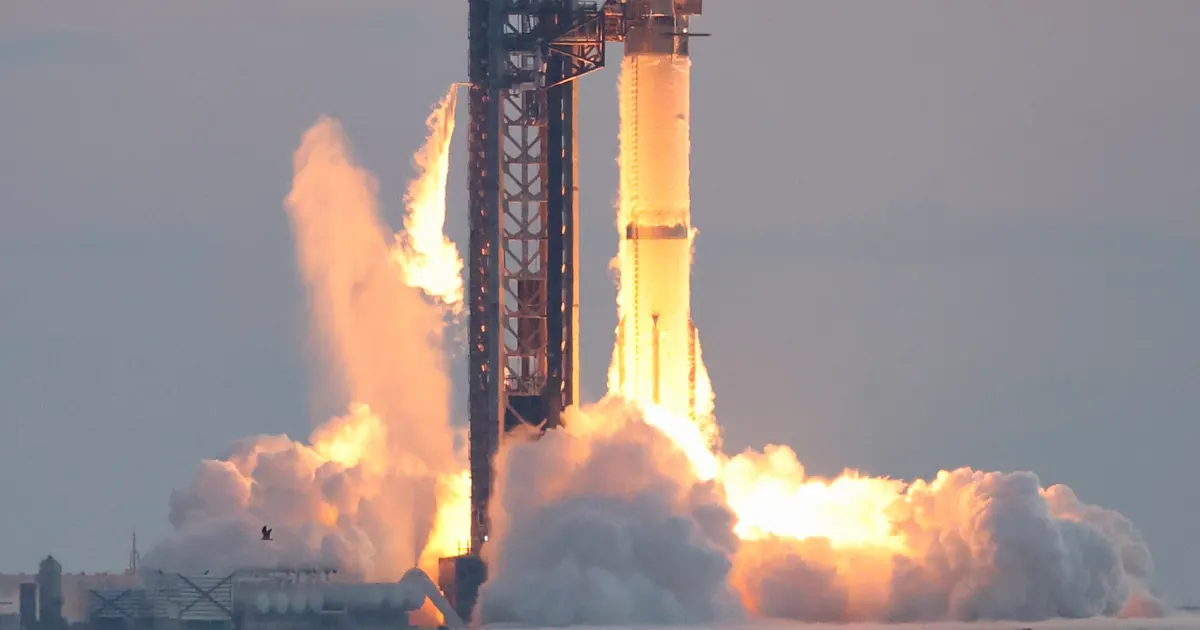
- SpaceX will use a Starship to launch communications satellites into cislunar space in 2028 for NASA's Cislunar Communications Deployment Demonstration.
- Blue Origin won a $94 million base contract, with a $140 million option, to land NASA's nuclear-powered PROMISE rover at the lunar South Pole, with launch targeted for late 2028.
- NASA also awarded about $1.3 billion in VADR launch and transportation task orders to Arrow Science and Technology, Blue Origin and Impulse Space.
NASA has handed out a large new package of Moon Base contracts. On Saturday, 7 November 2026, Administrator Jared Isaacman announced at the agency’s MAX POWER expo at Kennedy Space Center that eight companies will compete for up to $10 billion in lunar deliveries, that SpaceX will launch Moon communications satellites on Starship in 2028, and that Blue Origin will land a nuclear-powered rover at the lunar South Pole. The awards are meant to put the first pieces of a permanent outpost on the Moon before astronauts arrive.
What did NASA announce?
The announcement, NASA release 26-095, bundles several separate awards under the Moon Base programme, which is focused on the region around the lunar South Pole. We previewed the event in our MAX POWER air show and Moon Base update.
Isaacman summed up the approach in one line: “We are building the Moon Base mission by mission.” Carlos García-Galán, who manages the Moon Base Program, described the goal as a permanent outpost on the lunar surface.
The package covers five main areas:
- CLPS 2 cargo landers: a new $10 billion delivery contract with eight companies.
- Moon communications: a SpaceX Starship mission to cislunar space in 2028.
- PROMISE rover: a nuclear-powered South Pole rover delivered by Blue Origin.
- Launch and transport: about $1.3 billion in VADR task orders.
- Surface power: first components for a power and communications tower called miniCAST.
Which companies are in CLPS 2?
NASA selected Blue Origin, Firefly Aerospace, Intuitive Machines, ispace-U.S., Lockheed Martin Space, Northrop Grumman Space Systems, SpaceX and Voyager Technologies to compete for future robotic deliveries to the Moon’s surface.
CLPS 2 is a 10-year, multiple-award, indefinite-delivery/indefinite-quantity contract. Its combined maximum value of $10 billion is a ceiling shared by all eight firms, not a sum guaranteed to any one of them; each delivery will still be won through individual task orders.
NASA also raised the ceiling of the original CLPS contract from $2.6 billion to $4.2 billion. That first contract stays in place until November 2028, with five more years, through November 2033, to finish deliveries already awarded.
Why is SpaceX Starship launching Moon communications satellites?
Under an existing lunar logistics contract, NASA picked SpaceX for what it calls the Cislunar Communications Deployment Demonstration, ordered as a Specialized Delivery Mission. In 2028 a Starship will carry communications satellites into cislunar space, the region between Earth and the Moon.
NASA says the results will inform the design of future lunar communications networks. According to TeslaNorth, those networks are meant to link astronauts, mission controllers and the planned Moon Base itself.
TeslaNorth notes that NASA has not disclosed the value of the task order, how many satellites will fly or their exact orbits. It also stresses that this is a satellite deployment in space, separate from Starship’s role as the lander for crewed Artemis missions.
What is the PROMISE nuclear rover?
PROMISE stands for Polar Rover for Observation, Mapping, and In-Situ Exploration. It is a six-wheeled rover with nuclear power, so it can keep working through long lunar nights and inside permanently shadowed regions where solar panels would fail.
Key details from NASA:
- Builder: NASA’s Jet Propulsion Laboratory, which will manage the mission and assemble the rover from spare flight parts and engineering test models left over from the Curiosity and Perseverance Mars rovers.
- Science tools: a drill that reaches about 1 metre (3 feet) to pull up regolith, spectrometers, temperature and radiation sensors, visible-light cameras, NASA’s High Performance Spaceflight Computing processor and autonomy sensors.
- Timeline: launch targeted for late 2028, followed by an 18-month mission.
- Delivery: Blue Origin will land it with its Mark 1 lander under a $94 million base contract, plus a performance-based option worth another $140 million.
Tech Times points out that the option could take Blue Origin’s total for the mission to $234 million. The award expands a May 2026 task order under which Blue Origin is already set to deliver two lunar terrain vehicles. Blue Origin is also developing new hardware for heavier lunar missions, as covered in our story on its Glenn Stage 3 and Northstar engine.
What else is in the Moon Base package?
NASA awarded six task orders worth about $1.3 billion under its VADR (Venture-Class Acquisition of Dedicated and Rideshare) launch contract to Arrow Science and Technology, Blue Origin and Impulse Space. The missions will use Blue Origin’s New Glenn, Relativity Space’s Terran R and SpaceX’s Falcon 9, with orbital transfer vehicles from Blue Origin, Firefly Aerospace, Impulse Space and Quantum Space.
Those flights will test communications and navigation between Earth orbit and the Moon, deliver the CAPSTONE 02 spacecraft to deep space, and send highly mobile drones, including JPL’s MoonFall, to survey the South Pole.
For surface power, NASA will buy components for miniCAST, a Miniature Communications and Solar Tower. Honeybee Robotics, a Blue Origin company, will supply energy storage, Redwire will provide power generation and Yank Technologies will handle wireless power transfer. NASA’s Marshall Space Flight Center in Alabama will assemble and test the hardware.
What happens next?
Work on the miniCAST parts is expected to begin within months, and NASA plans a separate call for fully integrated power systems in early 2027. The agency also intends to issue a directed call under its NextSTEP-3 B solicitation to fill high-priority data gaps, which could mean small spacecraft, extra payloads on Moon Base flights or buying data from commercial partners.
The first competitive CLPS 2 task orders, the 2028 Starship communications flight and the late-2028 PROMISE launch are the next milestones to watch. Isaacman’s stated aim is that, when astronauts reach the South Pole, the first elements of the Moon Base will already be waiting for them.
Frequently asked questions
What did NASA choose SpaceX Starship for in 2028?+
NASA selected SpaceX for the Cislunar Communications Deployment Demonstration. In 2028 a Starship will carry communications satellites into the space between Earth and the Moon, and NASA will use the results to shape future lunar communications networks. It is a satellite deployment, not a Moon landing.
What is CLPS 2?+
CLPS 2 is the next phase of NASA's Commercial Lunar Payload Services programme. It is a 10-year, multiple-award contract with a combined ceiling of $10 billion, under which eight companies can compete for future robotic deliveries to the Moon's surface. The ceiling is a cap shared by all eight, not money guaranteed to any one company.
What is NASA's PROMISE rover?+
PROMISE, short for Polar Rover for Observation, Mapping, and In-Situ Exploration, is a six-wheeled, nuclear-powered rover that NASA's Jet Propulsion Laboratory will build from spare Curiosity and Perseverance hardware. It will drill about 1 metre into the lunar South Pole surface during an 18-month mission, with launch targeted for late 2028.
Sources
- NASA
- SpaceX Starship
- Moon Base
- CLPS
- Blue Origin
- Lunar South Pole

PFM Today Newsroom · News Desk
The PFM Today Newsroom tracks developments across startups, AI, design, business and more. Stories are researched from primary sources and reputable outlets, written with AI assistance, and reviewed against our editorial policy before publishing. Read our editorial policy.