BepiColombo Enters Mercury Orbit After an Eight-Year Journey
ESA and JAXA's BepiColombo entered orbit around Mercury on November 21, 2026. Here is how the capture worked and when its two probes start science.
Key points
- BepiColombo, a joint mission of the European Space Agency and Japan's JAXA, entered orbit around Mercury on November 21, 2026, ESA announced.
- The orbit insertion burn was scheduled to begin at 18:24 UTC and last about 37 minutes, with the two science probes still joined together.
- BepiColombo is only the second mission to orbit Mercury, after NASA's MESSENGER, which orbited the planet from 2011 to 2015.
- ESA's Mercury Planetary Orbiter and JAXA's Mio are due to separate on 9–10 December 2026, and science operations are planned to start in April 2027.
- The spacecraft launched on an Ariane 5 on October 20, 2018 and made nine planetary flybys: one of Earth, two of Venus and six of Mercury.
BepiColombo has arrived. The European Space Agency (ESA) announced on Saturday, November 21, 2026 that the joint European-Japanese spacecraft had entered orbit around Mercury, almost eight years after it left Earth. It is only the second mission ever to orbit the innermost planet, and the first to deliver two separate probes there.
What happened?
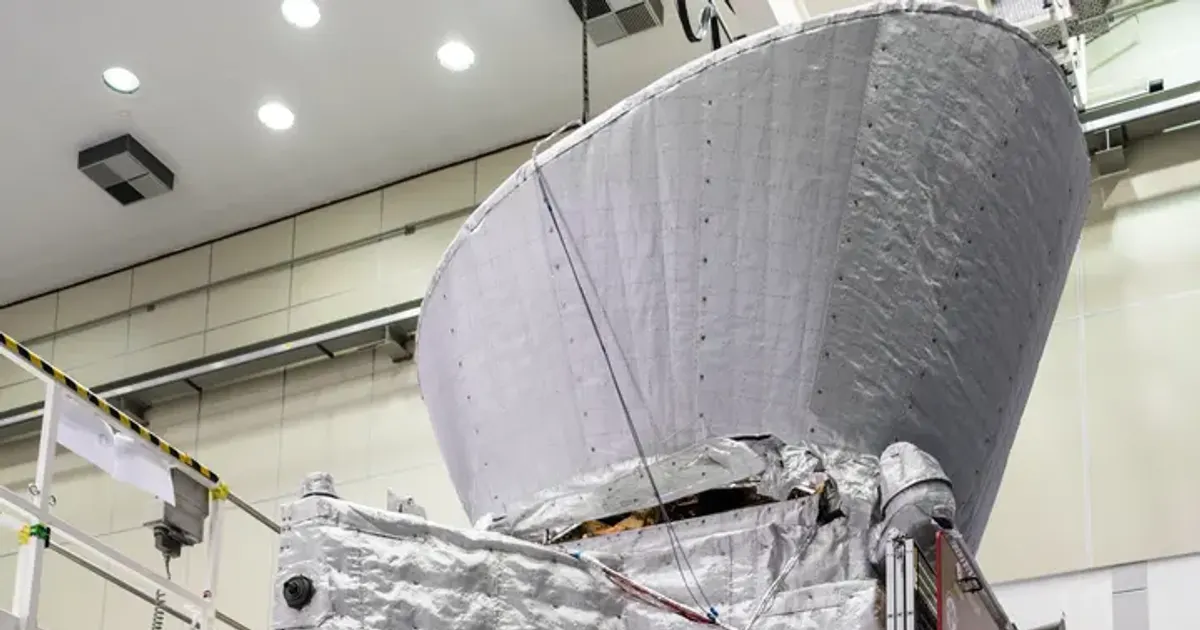
The orbit insertion burn was scheduled to start at 18:24 UTC on November 21 and run for about 37 minutes, according to Space.com and ESA’s operations team. ESA’s Mercury Planetary Orbiter (MPO) fired its thrusters while still attached to Japan’s Mercury Magnetospheric Orbiter, known as Mio, and the sunshield structure that protects it.
Nature reported that ESA announced the same day that the spacecraft had placed itself into orbit around Mercury. Japanese media also reported the confirmation on November 22, citing ESA.
ESA describes the method as a “weak stability boundary capture”. Instead of a single large braking burn, the spacecraft combines its engines with the gravity of the Sun and Mercury to lower its speed, so Mercury’s gravity gently captures it. That puts BepiColombo in a loose initial orbit that will be tightened over the coming months.
Why it took eight years
Reaching Mercury is harder than it sounds. “Energetically, it takes more energy to go to Mercury than to go to the outer Solar System,” University of Leicester planetary scientist Emma Bunce told Nature. A spacecraft falling towards the Sun gains speed, so it has to shed a huge amount of energy to stay at Mercury.
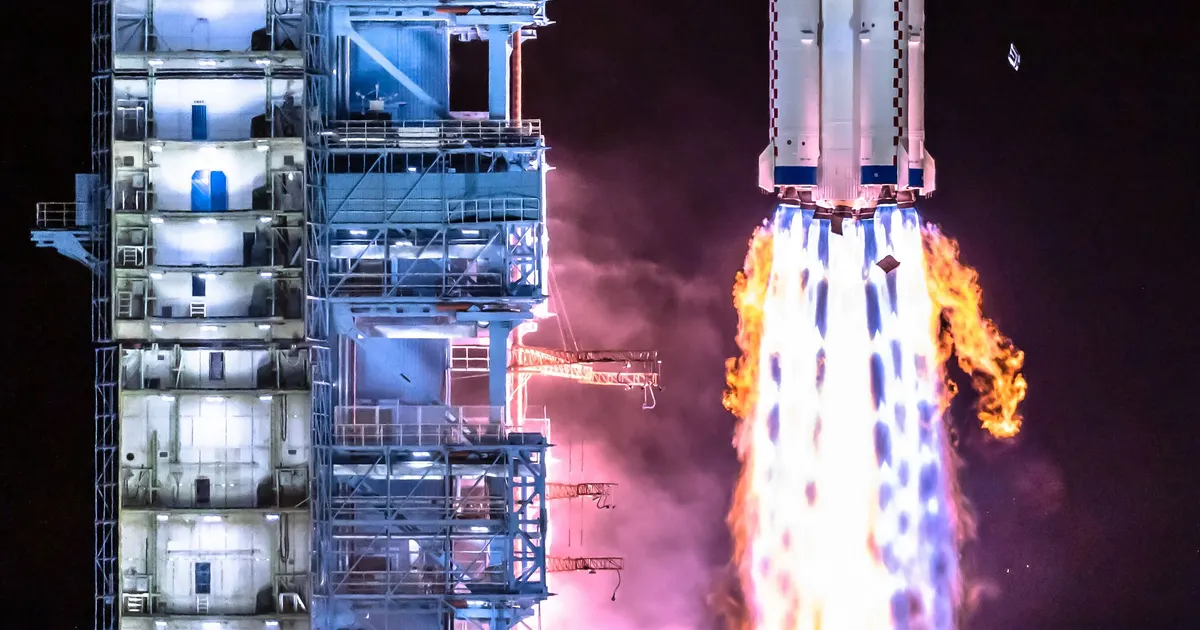
BepiColombo launched on an Ariane 5 from Kourou, French Guiana, on October 20, 2018, according to ESA. To slow down, it made nine planetary flybys: one of Earth in 2020, two of Venus in 2020 and 2021, and six of Mercury between 2021 and January 2025. It also used solar-electric engines on its transfer module, which separated on September 3, 2026, ESA said.
The arrival was originally planned for December 2025 but slipped by about a year after a power problem with the electric propulsion system, Space.com reported.
What happens next?
According to ESA’s arrival timeline, which it says may still change:
- 9–10 December 2026: MPO and Mio separate. Mio is released into a stretched polar orbit.
- 16 December 2026: the sunshield and interface structure (MOSIF) that protected Mio separates from MPO.
- March 2027: MPO reaches its final, lower science orbit after a series of further manoeuvres.
- April 2027: science operations begin.
Nature reported that Mio will fly elliptical orbits between roughly 500 km and 11,000 km above the surface to study Mercury’s magnetic field and its interaction with the solar wind. MPO will fly much closer, between about 400 km and 1,500 km, to map the surface and study its composition. The mission is planned to run for at least one Earth year, with a possible extension.
“Mercury is the least understood of the four terrestrial planets,” ESA project scientist Geraint Jones told BBC Sky at Night Magazine before the arrival.
Why it matters
Only one spacecraft has orbited Mercury before: NASA’s MESSENGER, from 2011 to 2015, Nature noted. BepiColombo brings two orbiters that will measure the planet from different orbits at the same time, one focused on the surface and one on the magnetic field and space environment. Together they are meant to fill in what remains unknown about how a small planet so close to the Sun formed and how it works.
The mission is also a showcase for European-Japanese cooperation in deep space. ESA built MPO and the transfer module, and JAXA built Mio. ESA’s recent deep-space work also includes the Hera mission’s first close-up of the Didymos asteroid system.
Key details
- Mission: BepiColombo (ESA and JAXA)
- Orbit entry: November 21, 2026; burn scheduled from 18:24 UTC for about 37 minutes
- Launch: October 20, 2018, Ariane 5, Kourou
- Launch mass: about 4,100 kg, including MPO (1,230 kg) and Mio (255 kg)
- Flybys: nine (Earth once, Venus twice, Mercury six times)
- Separation of the two orbiters: 9–10 December 2026
- Science start: April 2027
Frequently asked questions
Has BepiColombo reached Mercury?+
Yes. ESA announced on November 21, 2026 that BepiColombo had entered orbit around Mercury, almost eight years after launch. It now begins months of manoeuvres to reach its final science orbits.
When will BepiColombo start science at Mercury?+
The two orbiters are due to separate on 9–10 December 2026. ESA's Mercury Planetary Orbiter should reach its final orbit in March 2027, and ESA plans to start science operations in April 2027.
Why did it take so long to get to Mercury?+
Mercury sits deep in the Sun's gravity well, so a spacecraft has to shed a huge amount of speed to be captured. BepiColombo used nine flybys of Earth, Venus and Mercury plus electric propulsion to slow down, and its arrival was delayed by about a year by a power problem with its thrusters.
Sources
- BepiColombo
- ESA
- JAXA
- Mercury
- Mio

PFM Today Newsroom · News Desk
The PFM Today Newsroom tracks developments across startups, AI, design, business and more. Stories are researched from primary sources and reputable outlets, written with AI assistance, and reviewed against our editorial policy before publishing. Read our editorial policy.