Voinosis Wins Disrupt 2027 Battlefield Spot at Seoul's DETO 2026
Voice AI startup Voinosis beat eight Korean deep tech rivals at DETO 2026 in Seoul to earn a place in TechCrunch's Startup Battlefield 200 at Disrupt 2027.
Key points
- Nine early-stage South Korean startups pitched at the DETO 2026 conference in Seoul for a place in the Startup Battlefield 200 at TechCrunch Disrupt 2027.
- Voinosis, which uses AI to screen speech for signs of changing brain health, won the DETO pitch competition, TechCrunch reported on 12 November 2026.
- Voinosis says its speech check takes under five minutes and showed 88% accuracy in a 146-person clinical study.
- DETO 2026 was held at the Grand Hyatt Seoul, with South Korea's Ministry of SMEs and Startups and KISED among its hosts.
- TechCrunch lists Disrupt 2027 in San Francisco with a waitlist but has not yet published dates.
Voinosis, a Seoul-based startup that uses AI to listen for changes in brain health in the way people speak, has won a place in the Startup Battlefield 200 at TechCrunch Disrupt 2027. It beat eight other early-stage South Korean companies in a pitch competition at the DETO 2026 conference in Seoul, TechCrunch reported on 12 November 2026, less than a month after Disrupt 2026 ended in San Francisco.
What happened at DETO 2026?
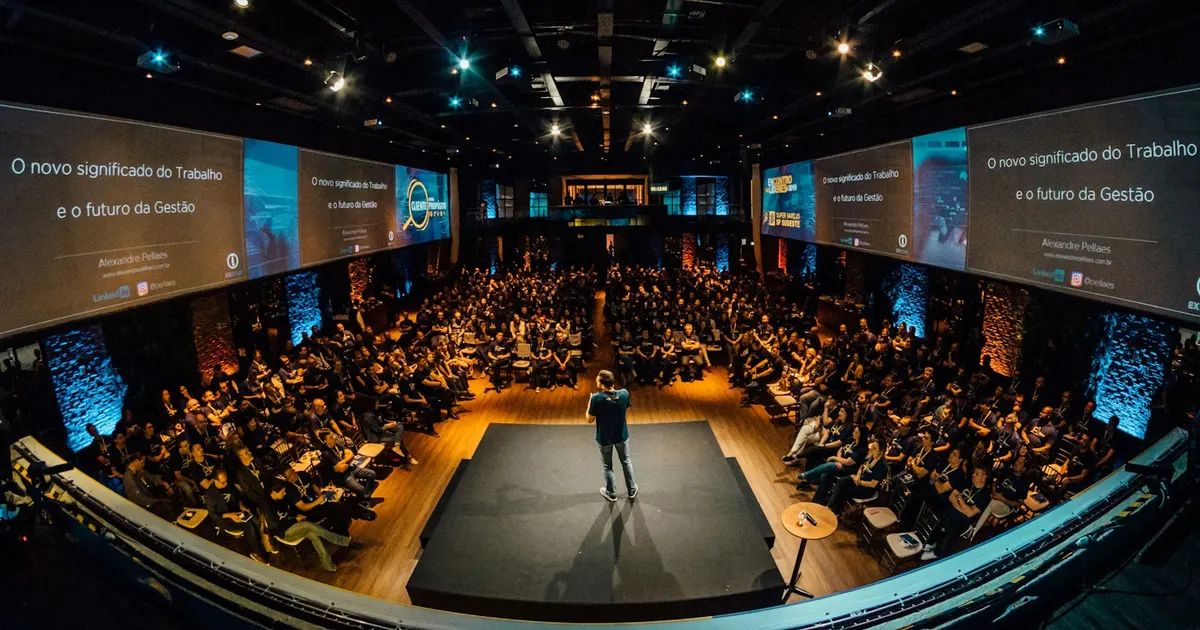
DETO, short for “Deep Dive Into 2026”, took place at the Grand Hyatt Seoul from 10 to 12 November. According to its event listing and local coverage, the conference was run by PEN Ventures with South Korea’s Ministry of SMEs and Startups (MSS) and the Korea Institute of Startup & Entrepreneurship Development (KISED) as hosts and sponsors.
Nine deep tech startups pitched there for a single prize: a spot in next year’s Startup Battlefield 200, TechCrunch’s annual cohort of early-stage companies that exhibit and pitch at Disrupt. All nine are aiming to enter the US market as part of a wider push abroad, and their fields covered healthcare, fintech, energy, semiconductors and AI.
TechCrunch’s Asia reporter Kate Park was also on the DETO programme, speaking in a 10 November session on global tech conferences alongside representatives of VivaTech and AZ Tech Week.
Who is Voinosis?
Voinosis was founded by Grace Shin, a former otologic (ear) surgeon with more than 25 years of experience. Its software studies the patterns in a person’s speech, including pitch, pauses, rhythm and how quickly they respond, to spot changes that can be linked to cognitive decline.
Key details the company shared, as reported by TechCrunch:
- A check takes less than five minutes.
- The model has been tested in Greek, Japanese and English without needing to be retrained for each language.
- The company says it reached 88% accuracy in screening for possible cognitive problems in a clinical study of 146 people.
- It is targeting hospitals, senior living facilities, insurers and consumers.
- Voinosis is raising a Series A round and already counts a South Korean pharmaceutical company as a strategic investor.
The 88% figure is the company’s own claim from a single study; it has not been independently confirmed.
The other eight Korean startups
TechCrunch listed the remaining contenders, which give a snapshot of where Korean deep tech founders are building:
- Awesome Lab (Seoul) makes ThermoFlux, a heating system based on water electrolysis and ionisation for buildings, hot water and industrial processes. In the US it plans to sell core modules to boiler, water heater and HVAC makers.
- Crosshub offers IDBlock, which lets travellers verify their identity and set up payments abroad using self-sovereign identity and zero-knowledge proofs, so less personal data is shared.
- DeepFusion AI combines 4D imaging radar with RF, radar and lidar sensors in one unit for robotaxis, autonomous mobility, maritime surveillance and defence.
- EFLOW builds compact, high-torque motors and actuators for robots, drones and satellites.
- Otiton Medical makes a thermometer and an ear-canal camera whose AI, trained on roughly 55,000 eardrum images, analyses the eardrum. The device is medically certified in South Korea.
- Riibotics says it can get warehouse robots running within a day by streamlining mapping, middleware integration, task programming and safety checks.
- Ternell (Ulsan), founded in 2019 by former Samsung Electronics engineer KyungRok Kim, is developing T-SRAM, memory that adds a third state to the usual two. On 28-nanometre test chips it reported 33% to 102% more memory capacity per area and 55% to 71% lower data-access energy than standard SRAM.
- Testbank runs Solve, an app that uses AI to turn printed workbooks and test-prep books into interactive digital pages that grade answers automatically.
Why it matters
The DETO competition shows how TechCrunch fills its Battlefield cohort well before Disrupt itself. Regional partner events give international startups a route into the programme without going through only the open application. For Korean founders, a Battlefield 200 place means a booth, a chance at the main-stage Top 20, and exposure to US investors.
This year’s results also show what that stage can lead to. At Disrupt 2026, gut-organoid company Intero Biosystems won the Startup Battlefield and its $100,000 equity-free prize, beating four other finalists. TechCrunch says more than 1,700 Battlefield alumni have together raised over $30 billion.
What happens next for Disrupt 2027?
As of 14 November 2026, TechCrunch’s website lists Disrupt 2027 in San Francisco and offers a waitlist, but no dates have been published. Disrupt 2026 ran from 13 to 15 October at Moscone West. We will add Disrupt 2027 to the PFM Today tech events calendar once TechCrunch confirms the dates.
Founders who want to compete without a partner event can apply directly when TechCrunch opens applications, usually in the first half of the year. Our guide on how to get into Startup Battlefield explains the eligibility rules and prizes.
Frequently asked questions
Who won the DETO 2026 pitch competition for Disrupt 2027?+
Voinosis, a Seoul-based startup that analyses speech with AI to detect changes linked to brain health, won the competition at DETO 2026. The prize is a place in the Startup Battlefield 200 at TechCrunch Disrupt 2027.
When is TechCrunch Disrupt 2027?+
As of 14 November 2026, TechCrunch lists Disrupt 2027 in San Francisco and offers a waitlist, but it has not announced the dates. Disrupt 2026 ran from 13 to 15 October 2026 at Moscone West in San Francisco.
What is the Startup Battlefield 200?+
It is TechCrunch's cohort of 200 early-stage startups chosen to exhibit and pitch at Disrupt. The top 20 pitch on the main stage, and the overall winner receives $100,000 in equity-free funding and the Disrupt Cup.
Sources
- TechCrunch – Nine Korean startups vie for a spot in Disrupt 2027's Startup Battlefield 200 competition
- Luma – DETO 2026 (DEEP DIVE INTO 2026) special session: Physical AI Investment Outlook
- TokenPost – DETO 2026 Schedule Includes DIPS Startup Demo Day Session
- TechCrunch – And the winner of Startup Battlefield at Disrupt 2026 is: Intero Biosystems
- TechCrunch Disrupt
- Startup Battlefield
- Voinosis
- South Korea startups
- Disrupt 2027

PFM Today Newsroom · News Desk
The PFM Today Newsroom tracks developments across startups, AI, design, business and more. Stories are researched from primary sources and reputable outlets, written with AI assistance, and reviewed against our editorial policy before publishing. Read our editorial policy.