
The arrival of October means one thing for dedicated skywatchers: the annual meteor shower created by the most famous comet of all time. The Orionid meteor shower 2025 stands out as a major event on the celestial calendar. It promises a spectacular display, thanks to the perfect viewing conditions this year. The Moon will be new, ensuring an exceptionally dark night sky for observing the swift, bright shooting stars. Halley’s Comet left this debris. If you plan to witness one of the year’s most anticipated astronomical events, you must know exactly when and where to look.
We confirm the Orionid meteor shower 2025 is a key event this October. People consider the shower a medium-strength display that consistently produces bright meteors and even the occasional fireball. With moonlight out of the equation for the peak, 2025 offers an ideal chance to view the remnants of the ancient Comet Halley streaking across the night sky.
When Does the Orionid Meteor Shower 2025 Peak?
The Orionid meteor shower shows activity over a long period. It typically runs from early October to early November. Its most intense activity—the shower’s peak—is narrowly defined, however. In 2025, the shower reaches its maximum display during the night of October 21–22. Most reputable astronomical sources advise watching in the hours between midnight and dawn.
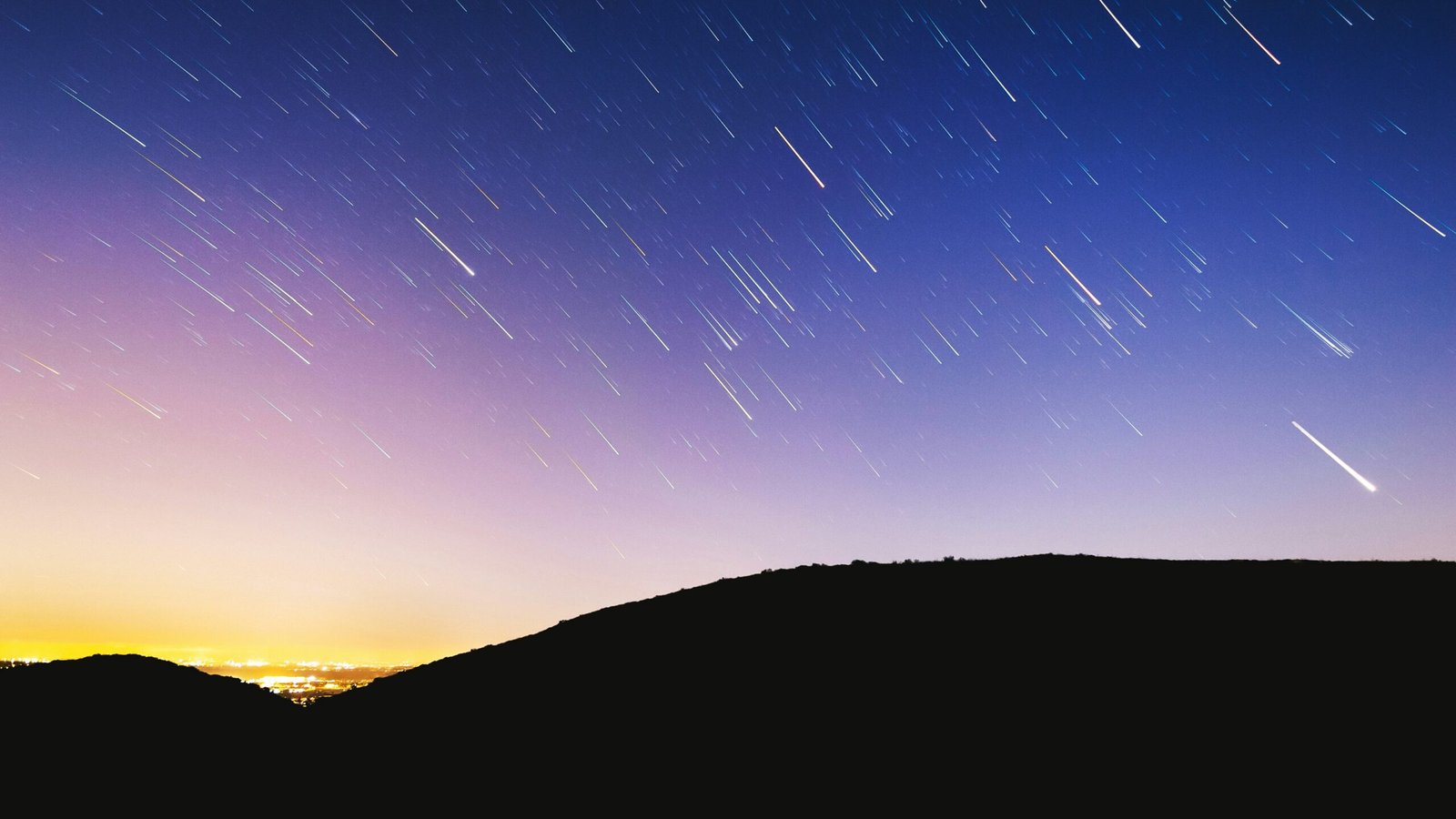
To catch the highest number of meteors, observers should plan to be outside starting around 11:30 PM local time on October 21st. The show continues through the predawn hours of October 22nd. During this window, you can expect the Zenithal Hourly Rate (ZHR) to hover around 15 to 20 meteors per hour under dark skies. These meteors move fast, hitting our atmosphere at about 41 miles per second. They are often noted because they leave glowing, incandescent trails that can persist for several seconds.
Optimal Viewing Conditions for the Orionid Meteor Shower 2025
The Moon’s phase determines a meteor shower’s visibility; this factor is the most important one. Fortunately for those hoping to see the Orionid meteor shower 2025, viewing conditions are near-perfect. The peak of the shower coincides almost exactly with the New Moon, which falls on October 21st.
A new moon means zero lunar light pollution. This allows you to see even the fainter meteors. To maximize your experience, you must prioritize getting away from city lights. Find a viewing spot in a dark, rural location with a wide, unobstructed view of the sky.
- Allow your eyes at least 30 minutes to adjust fully to the dark.
- Bring a lounge chair or blanket to comfortably gaze straight up.
- Look towards the east and southeast skies. The shower’s radiant—the constellation Orion—will be highest there.
- Do not look directly at the radiant. Instead, pick a patch about 40 degrees away, where the meteor trails will appear longest and most spectacular.
The Celestial Link: Halley’s Comet and Orionid Meteor Shower 2025
You witness a tiny piece of the legendary Halley’s Comet with every shooting star during this display. This comet, officially designated 1P/Halley, orbits the Sun once every 76 years. Halley’s Comet generates two major meteor showers: the Orionids and the Eta Aquariids in May.
Halley’s Comet sheds dust and icy debris as it travels through space. Every year in October, the Earth crosses this debris trail. These particles—some as small as a grain of sand—slam into our atmosphere. They burn up instantly, producing the spectacular streaks of light we call the Orionids. This celestial connection makes the Orionids unique. It allows stargazers to see ancient remnants of one of the solar system’s most celebrated travelers.
Other Major Meteor Showers of Late 2025 and Early 2026
While the Orionid meteor shower 2025 is the current highlight, the year’s end and the start of 2026 bring several other must-see events for the astronomy enthusiast.
The Leonid meteor shower peaks around November 17th. It offers swift, bright meteors with a ZHR of about 15. Conditions should be favorable, as the Moon will only be a slight crescent and will not drastically interfere. Following closely is the highly anticipated Geminid meteor shower in December. Many consider the Geminids one of the most spectacular showers of the year. It boasts a potential ZHR of 120-150. Its maximum on December 13-14 will also benefit from low moonlight. Finally, the year concludes and starts anew with the Quadrantid meteor shower on January 3–4, 2026. This shower is known for its very intense, short peak and potential for bright fireballs.
Conclusion
The exceptional dark sky conditions coinciding with the peak of the Orionid meteor shower 2025 make this October a landmark event for skywatchers globally. Prepare for the peak night of October 21-22 and find a suitable location away from light pollution. This gives you the best possible chance to witness the beautiful fragments of Halley’s Comet as they burn up in the Earth’s atmosphere. This year’s Orionids promises a bright, memorable cosmic display.