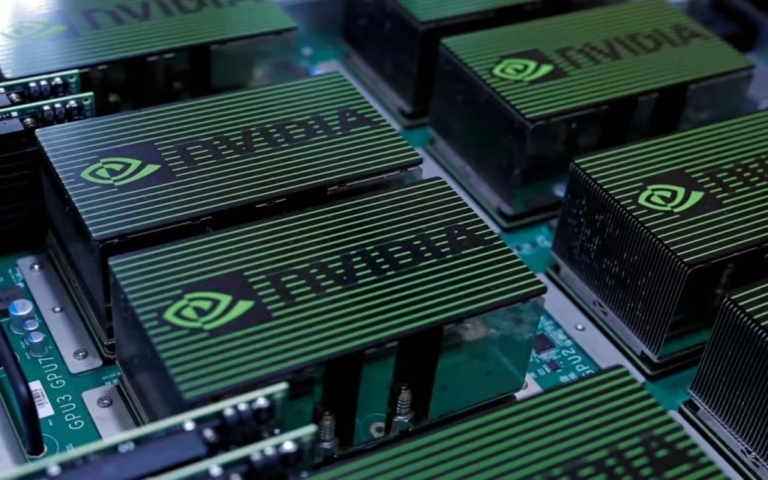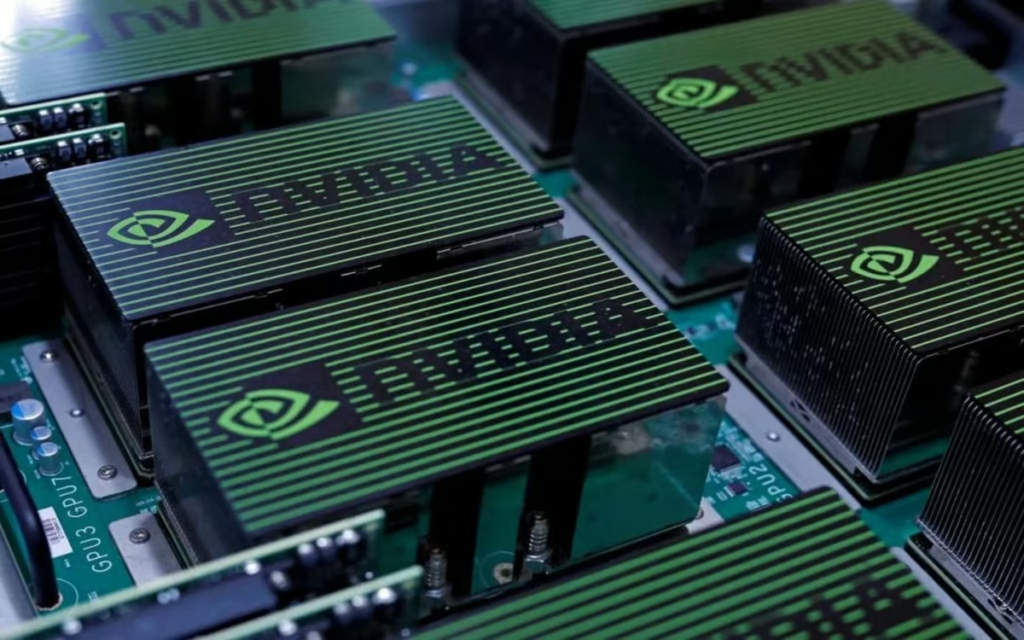

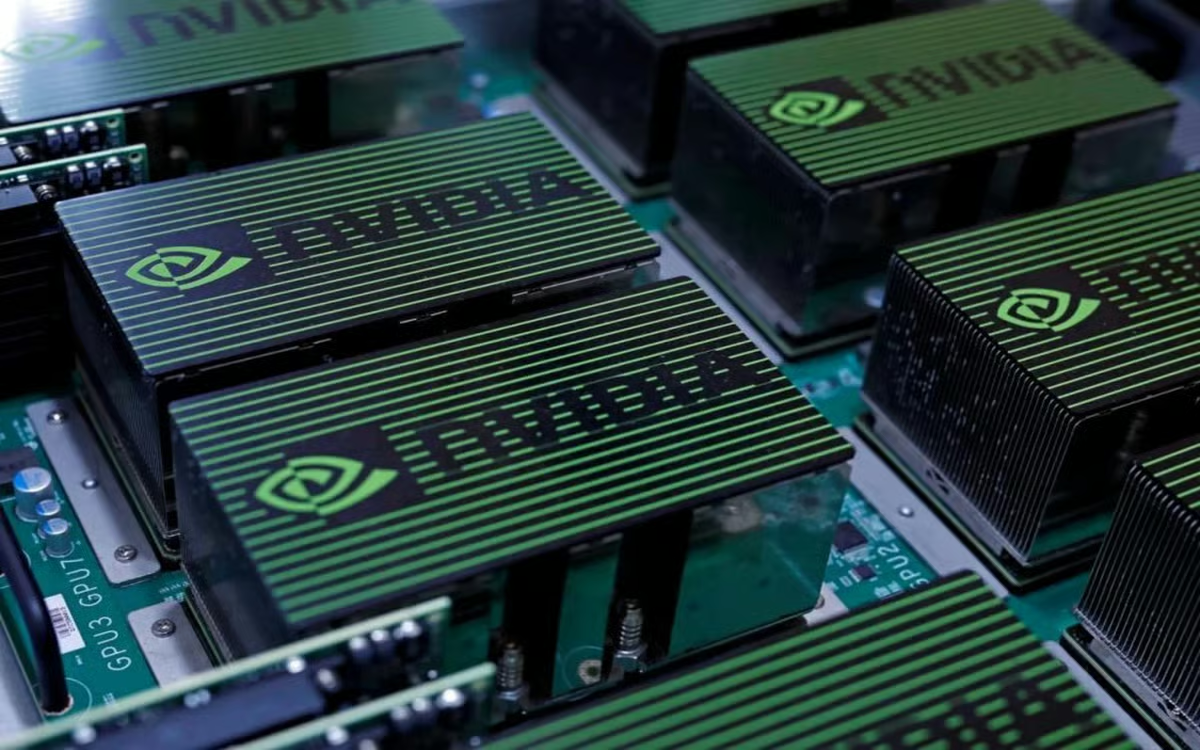
The landscape of high-performance computing changed forever this week in Las Vegas. During the CES 2026 keynote, Jensen Huang introduced the world to the Nvidia Rubin platform, a revolutionary six-chip architecture. This system represents the culmination of over 15,000 engineer-years of dedicated work. It is not just a faster processor; it is a complete reimagining of how data centers handle intelligence. As AI models grow to trillions of parameters, traditional hardware struggles to keep pace. Consequently, Nvidia designed this new platform to slash costs while providing unprecedented scale.
Early reports suggest that this technology will power the next generation of “AI superfactories” globally. Companies like Microsoft and OpenAI are already lining up to integrate these systems into their infrastructure.
The Architecture of the Nvidia Rubin platform
Engineers built the Nvidia Rubin platform using a method called extreme codesign. This approach ensures that all six primary chips work as a single, unified engine. The heart of the system is the Rubin GPU, which features 336 billion transistors. Furthermore, it utilizes the new HBM4 memory to achieve a staggering 22 TB/s of bandwidth. Alongside the GPU sits the Vera CPU, an 88-core custom Arm processor designed for massive data movement.
This tight integration allows for seamless communication between compute and memory. Therefore, bottlenecks that slowed down previous generations are now largely eliminated. The inclusion of the BlueField-4 DPU also helps manage complex storage tasks without taxing the main processors.
Breakthrough Specs of Vera and Rubin
The technical specifications of these chips are truly mind-blowing for industry experts. For instance, the Rubin GPU delivers 50 petaflops of inference performance. This is five times the capability of the previous Blackwell generation. Additionally, the Vera CPU uses spatial multi-threading to handle 176 threads simultaneously. This makes it perfect for the orchestration of complex AI agents.
- Rubin GPU: 336B transistors and HBM4 support.
- Vera CPU: 88 custom cores with 1.2 TB/s bandwidth.
- NVLink 6: Provides 3.6 TB/s of bi-directional speed.
- Spectrum-6: New Ethernet switches for massive scale-out.
These components ensure that the hardware can handle even the most demanding training workloads. Most importantly, the efficiency gains mean companies can achieve more with less physical space.
Why the Nvidia Rubin platform Trumps Blackwell
Efficiency is the primary reason why the Nvidia Rubin platform is such a game-changer. Compared to the Blackwell architecture, this new system reduces inference token costs by 10 times. Moreover, data centers can train massive mixture-of-experts models with four times fewer GPUs. This reduction in hardware requirements directly leads to lower energy consumption. In an era where power grids are under stress, these savings are essential for sustainability.
Nvidia also introduced the NVL72 rack-scale solution for this platform. This setup treats an entire rack of 72 GPUs as one single, giant processor. As a result, developers can run trillion-parameter models with minimal latency.
Powering the Next Frontier of Agentic AI
We are moving past simple chatbots and into the age of autonomous AI agents. The Nvidia Rubin platform is specifically optimized for this transition. Agentic AI requires hardware that can reason, plan, and execute tasks in real-time. By using the new Inference Context Memory Storage, the platform accelerates these reasoning loops significantly. This allows AI systems to remember past interactions and make better decisions.
Furthermore, the Spectrum-6 Ethernet switch ensures that these agents can communicate across massive clusters. This creates a neural network of machines that can solve scientific and industrial problems. Consequently, we expect to see rapid breakthroughs in fields like drug discovery and climate modeling.
Final Verdict on the Nvidia Rubin platform
The launch of this technology marks a pivotal moment for the tech industry. The Nvidia Rubin platform successfully addresses the “insatiable” demand for compute power while keeping costs manageable. By naming the platform after astronomer Vera Rubin, Nvidia honors a legacy of discovery while looking toward the stars. This hardware is now in full production and will reach customers in the second half of 2026.
In conclusion, the competition will find it difficult to catch up with this level of integration. Nvidia has once again proven why it leads the world in accelerated computing. As these racks begin to fill data centers, we will see a new wave of intelligence that was previously impossible. The future of AI is no longer a distant dream; it is arriving on a Rubin chip.