
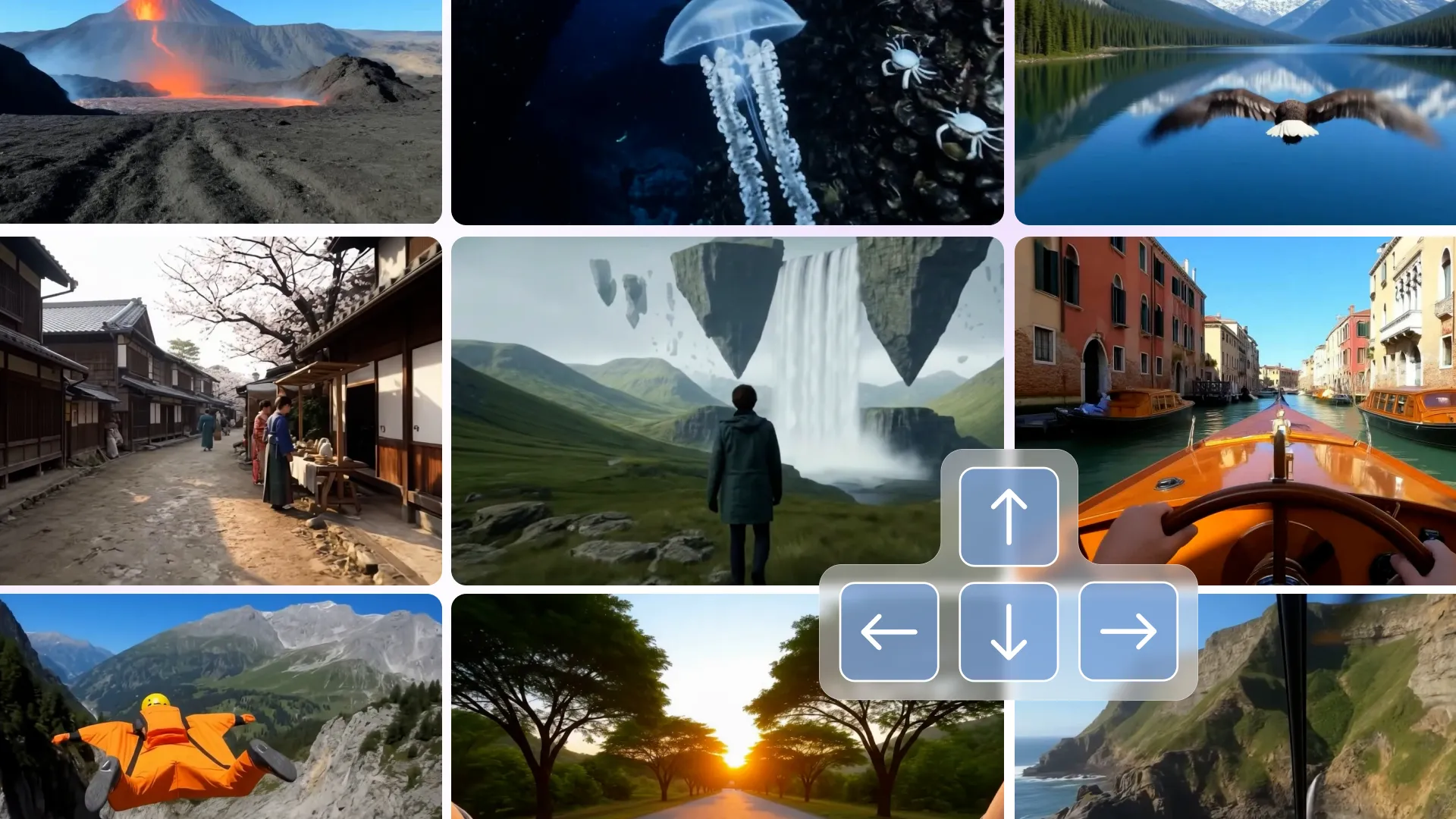
The digital landscape is shifting, and Google is leading the charge with an unprecedented leap in artificial intelligence. Google DeepMind recently revealed its newest creation, “Genie 3,” an AI model that can generate and simulate immersive, interactive 3D environments in real-time. This is a game-changing development for everything from gaming to robotics. Unlike static image or video generation, the Google Genie 3 AI creates dynamic virtual worlds that users can explore and influence. It represents a significant step forward in the field of “world models” and showcases Google’s commitment to creating the next generation of AI-powered experiences.
The Breakthrough Technology of Google Genie 3 AI
Genie 3 is a major technical upgrade from its predecessor, Genie 2. While the previous model could only produce short, low-resolution videos, Genie 3 generates environments at a smooth 24 frames per second and 720p resolution. Most importantly, it allows for several minutes of continuous interaction. The core innovation is its ability to maintain “spatiotemporal consistency.” This means that if you move through a virtual world, turn away from an object, and then return, the object and any changes you made will still be exactly where you left them. This visual memory is something that even advanced game engines have struggled to achieve. The Google Genie 3 AI effectively learns the “physics” of its simulated world, not through pre-programmed rules, but by observing vast amounts of video data.
Beyond Gaming: The Promise of Google Genie 3 AI
While the idea of an AI that creates game worlds in real-time is fascinating, Google DeepMind’s vision for Genie 3 goes much deeper. The company views this technology as a crucial “stepping stone on the path to AGI” (Artificial General Intelligence). The simulated worlds created by the Google Genie 3 AI are not just for entertainment; they are a safe, virtually limitless training ground for AI agents. By interacting with these consistent, physics-aware environments, AI agents can learn, adapt, and improve their understanding of the world. This is a key step towards developing AI that can perform a wide range of human-level tasks, as they can practice complex behaviors in a controlled setting before being deployed in the real world.
Promptable World Events in Google Genie 3 AI
One of the most exciting features of the new model is its ability to handle “promptable world events.” In an interactive Genie 3 world, users can change the environment on the fly using simple text prompts. Want to add a new character? Just type a command. Need to change the weather from sunny to stormy? The model makes it happen instantly. This level of dynamic customization offers unprecedented creative freedom for designers, researchers, and creators. It also allows for the creation of endless “what if” scenarios, which are essential for training AI agents to handle unexpected situations. The real-time nature of the model makes these interactions feel seamless and immersive, pushing the boundaries of what is possible with generative media.
What’s Next for This AI World Model?
Genie 3 is currently in a limited research preview, available only to a small cohort of academics and developers. This cautious rollout allows Google DeepMind to gather feedback and address potential risks before a wider release. Despite its incredible capabilities, the model still has some limitations, such as its inability to generate clear text or model complex interactions between multiple agents. However, the progress shown from Genie 2 to Genie 3 is staggering. It signals that we are on the cusp of a new era where AI doesn’t just create content but builds entire, interactive realities. The future impact of this technology will be felt across numerous industries, making Genie 3 a landmark achievement.
Also PFM Today for more updates.